A Checklist for Making AI-Generated Code Audit-Ready
AI writes it. You ship it. Six months later, can you prove it? Here’s how to make AI-generated code audit-ready.

AI writes it. You ship it. Six months later, can you prove it? Here’s how to make AI-generated code audit-ready.
Code review got stuck at the merge. AI is the forcing function to move it upstream.
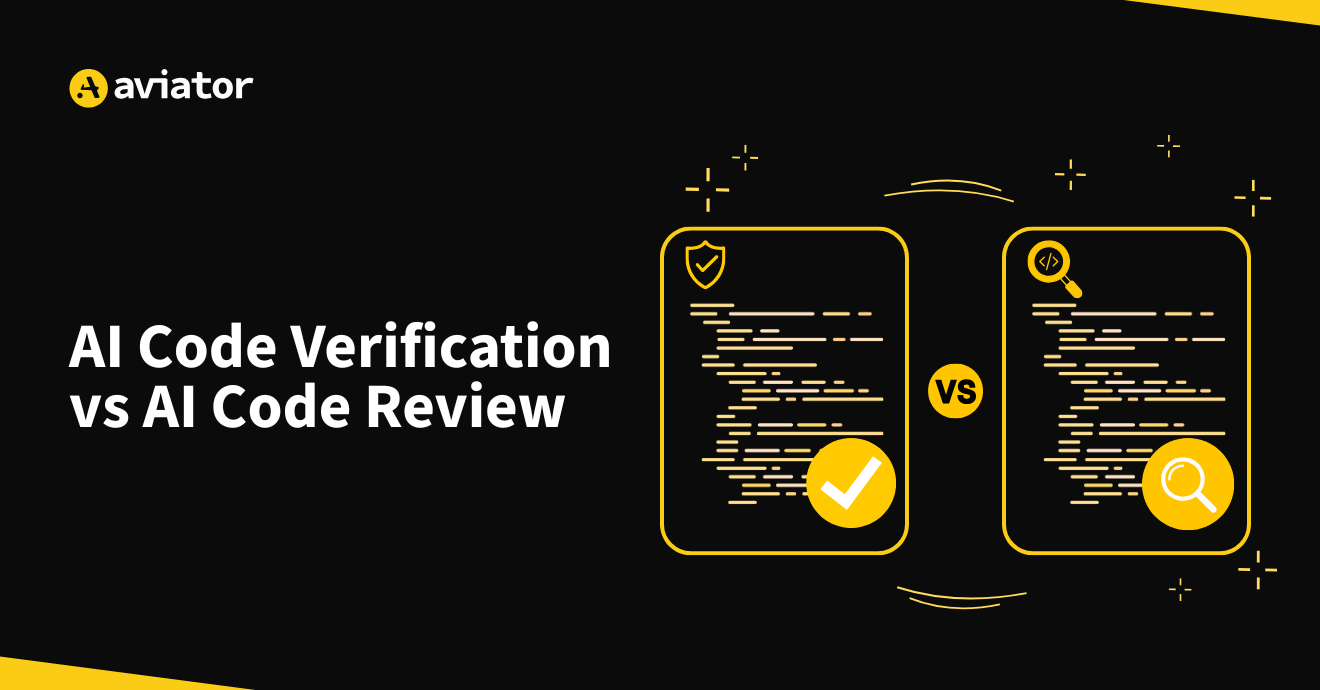
AI review gives you comments. AI verification gives you proof. If you’re shipping AI-generated code, here’s why that difference matters.
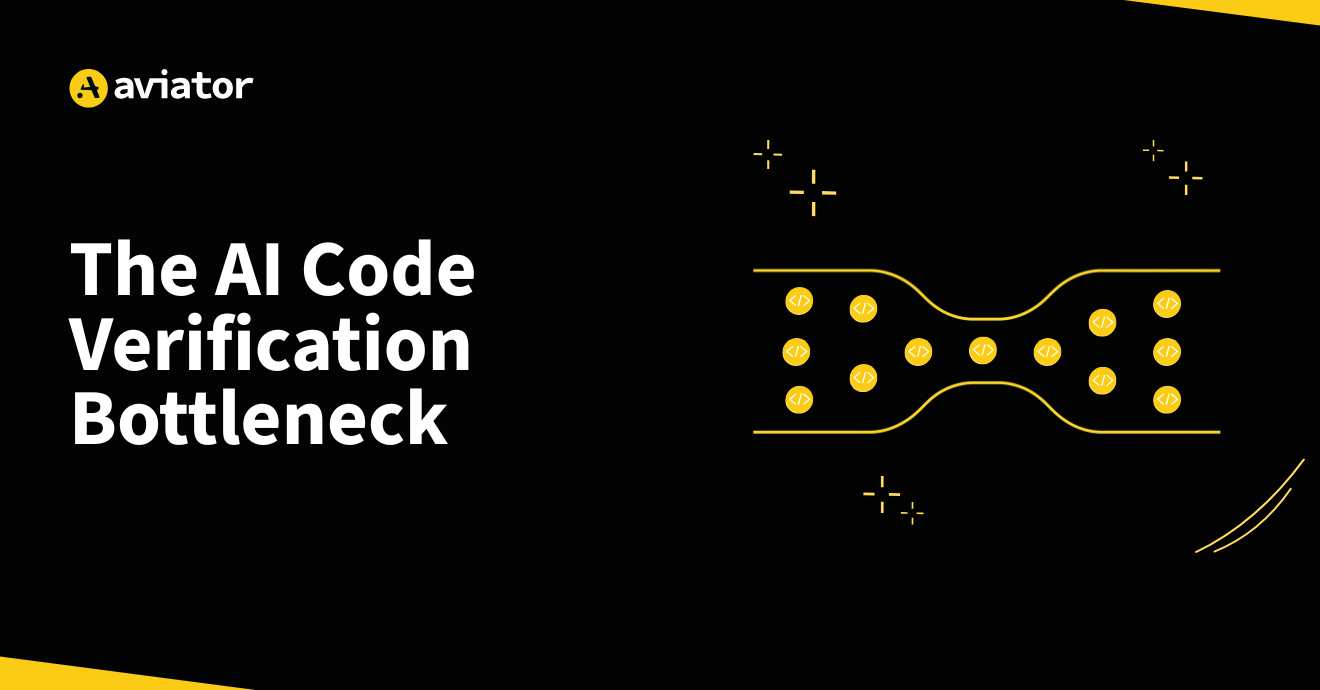
AI speeds up code generation, but PR reviews can’t keep up. Teams ship more than ever, yet review queues grow and cycle times slow down. Learn what’s breaking in the process and how shifting verification to specs fixes the bottleneck.
AI code reviewed by AI can look correct, tests pass, style is fine and reviews approve, but still miss real requirements. The issue is not ability, it is circular validation. Both systems rely on the same patterns. Without a human-checked spec as the source of truth, correct can still be wrong.

Compare Aviator, Cursor, GitHub Copilot, and Tabnine to find the right fit for your team’s workflow and scale.
Learn how AI coding standards prevent codebase fragmentation by turning individual knowledge into shared, reusable guidelines for both human and AI contributors.
AI coding agents work in isolation. Multiplayer AI coding uses shared specs so teams and their agents stay aligned across sessions and roles.
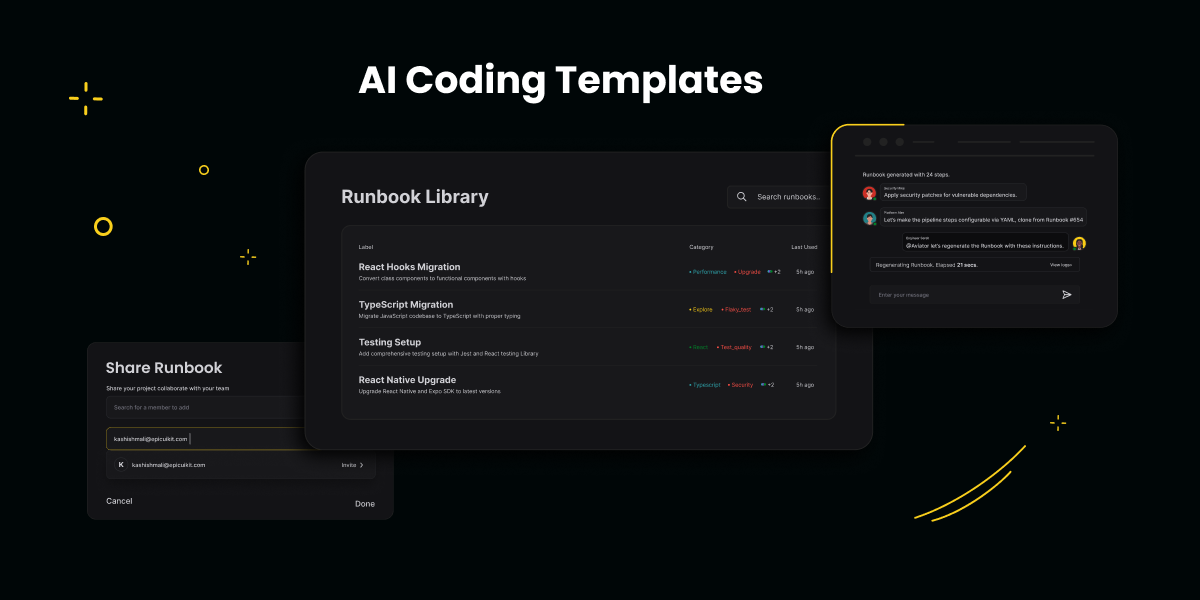
Stop losing your best AI workflows to random markdown files.
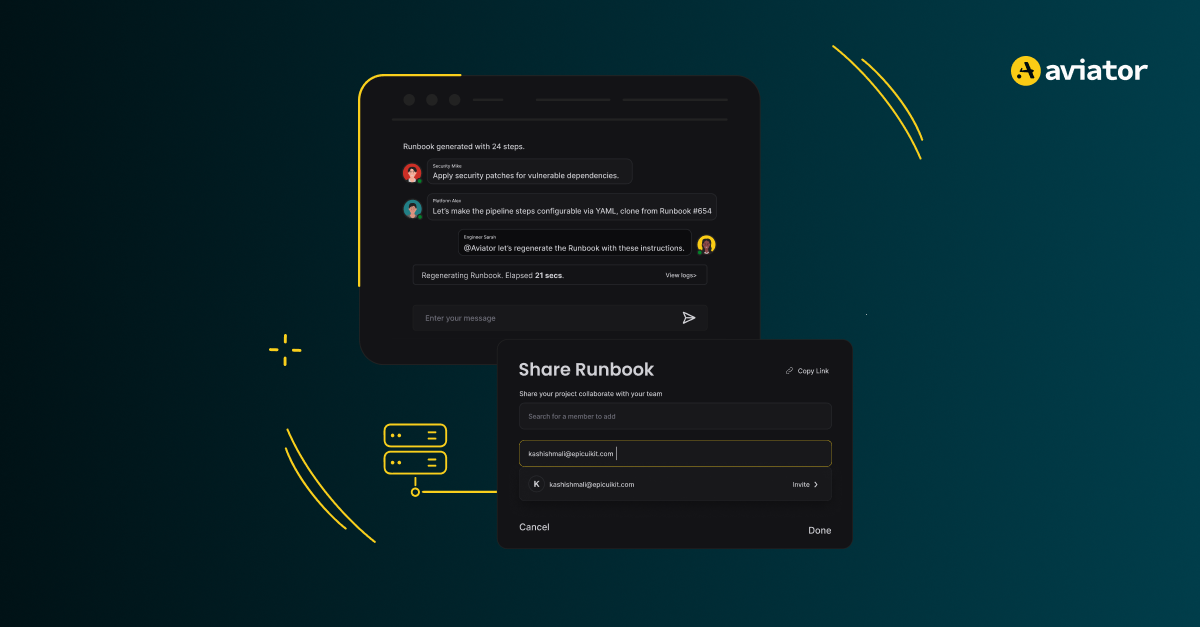
Runbooks doesn’t replace Claude Code; it transforms AI from an individual tool into a multiplayer development platform through spec-driven development.