Inside Runbooks: How Spec-Driven Development Works

Meet Aviator Runbooks, a Claude-powered tool that plans and runs tasks in a sandbox. You describe what you want, review the specs and let the agent execute them.

Meet Aviator Runbooks, a Claude-powered tool that plans and runs tasks in a sandbox. You describe what you want, review the specs and let the agent execute them.
Comparing two ways of completing the same upgrade: migrating a Node.js 14 project to Node.js 18 by chatting with an AI assistant and performing the same migration through a spec-driven development approach, with a strict, pre-written plan.
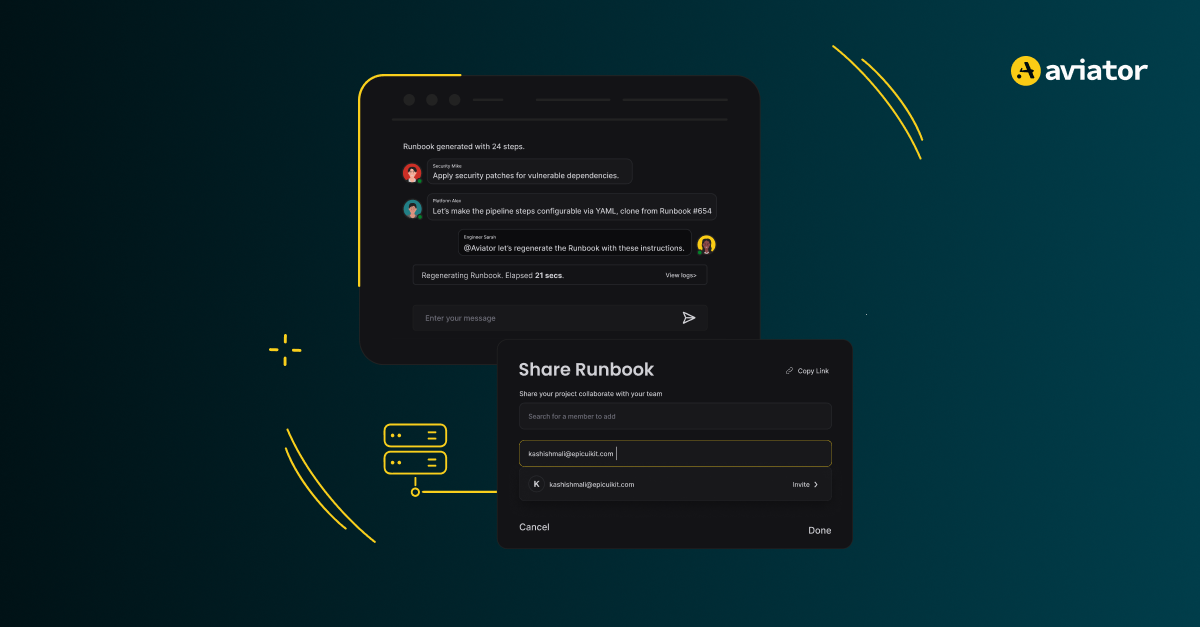
Runbooks doesn’t replace Claude Code; it transforms AI from an individual tool into a multiplayer development platform through spec-driven development.
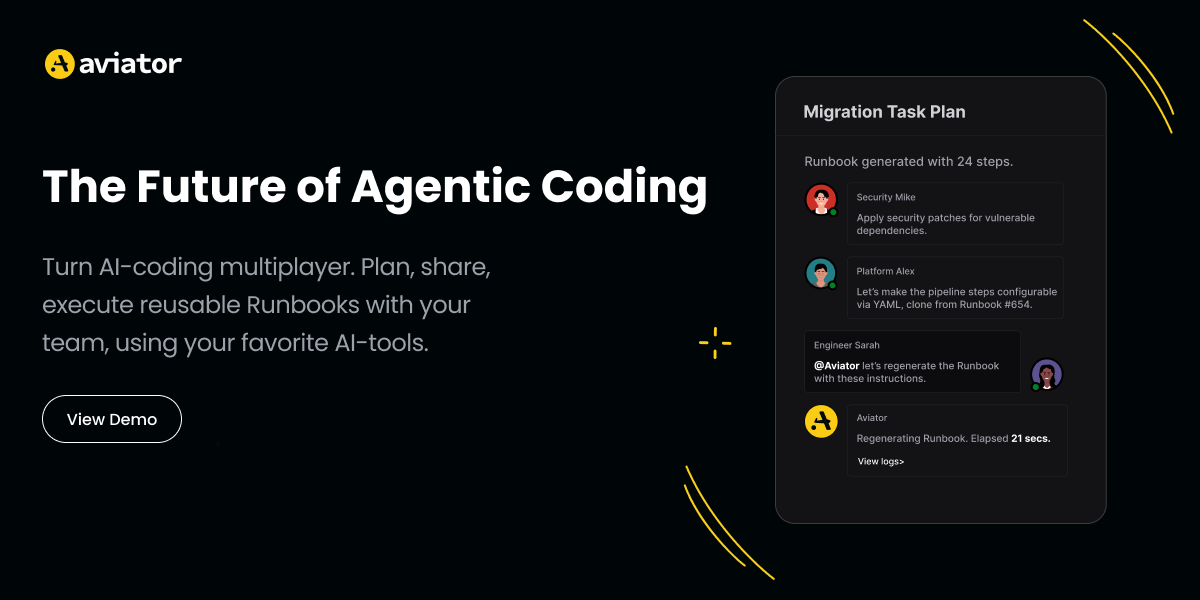
Spec-driven development replaces the chaos of ad hoc, prompt-driven vibe coding with a structured, durable way for engineering teams to work on AI coding projects.

The future of AI coding in enterprise lies in spec-driven development, shared context, and collaboration, not vibe coding.
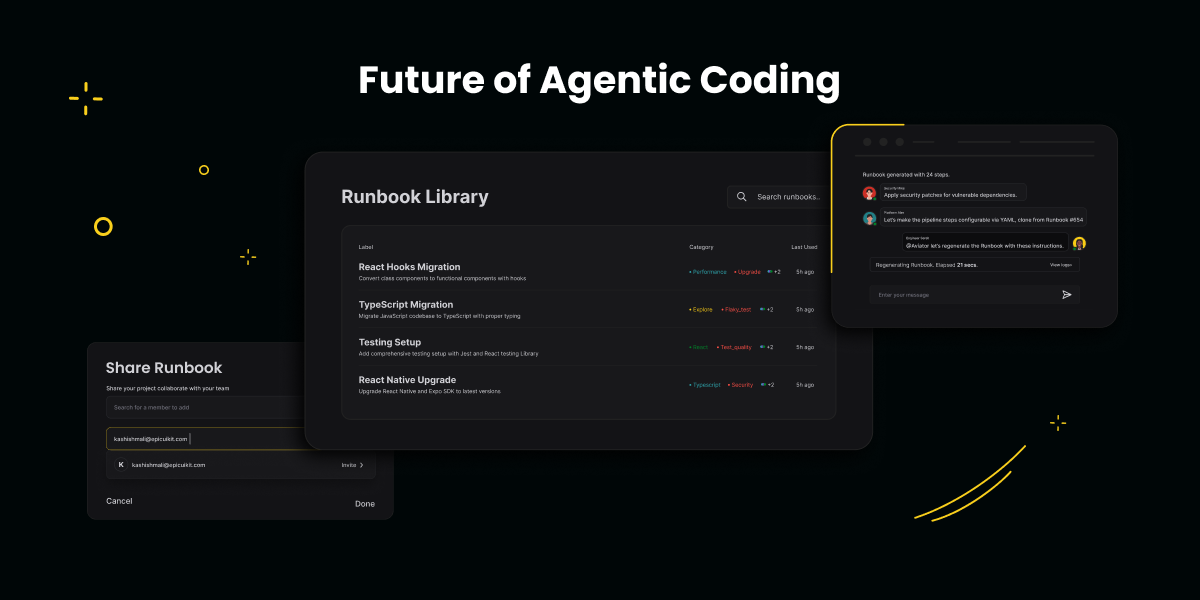
Spec-driven development is not a choice but a necessity as we move from vibe coding a cool app to building real-world brownfield projects.

Building software with AI agents isn’t a solo sport, especially when projects touch multiple repos, services, and prompt engineering knowledge.